


Want to stay up to date?

From grass to milk: why every step in the forage process matters
A good forage process does not start in the silage clamp, but already in the grassland. Every step directly affects feed quality, milk production and ultimately your return.
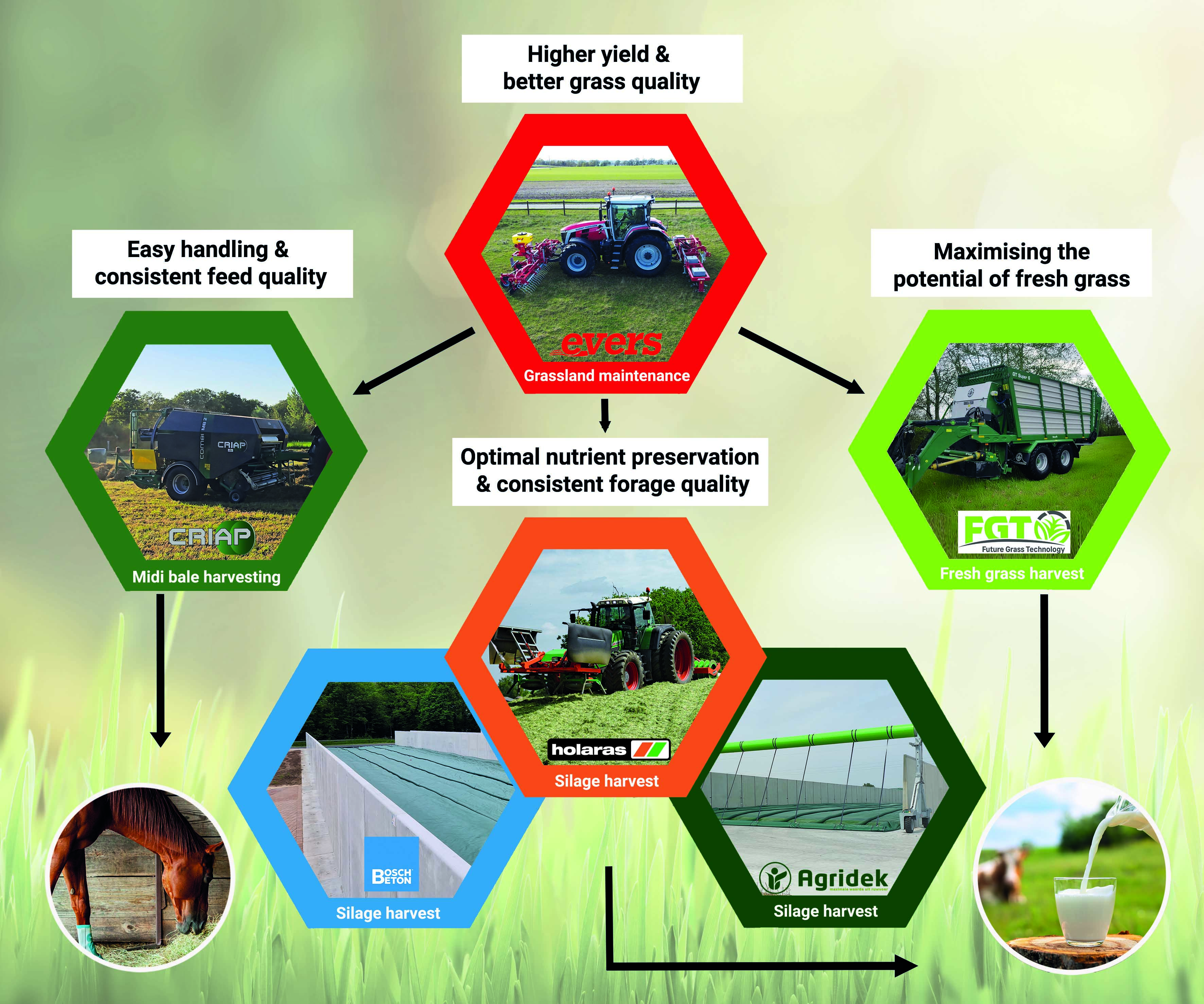
With rising costs and pressure on margins, it becomes increasingly important to get maximum quality from your own forage. That is exactly why Holaras, Evers, Bosch Beton, Agridek, Criap and MaksiGrass in Scandinavia work together under the theme: From grass to milk. Not as separate links in the chain, but as one complete solution. Because only when every step is right, you get the most out of your grass.
The foundation starts in the grassland
A high yield and strong feed value begin with a healthy field. Professional grassland management is essential, with one clear goal: a dense, productive sward.
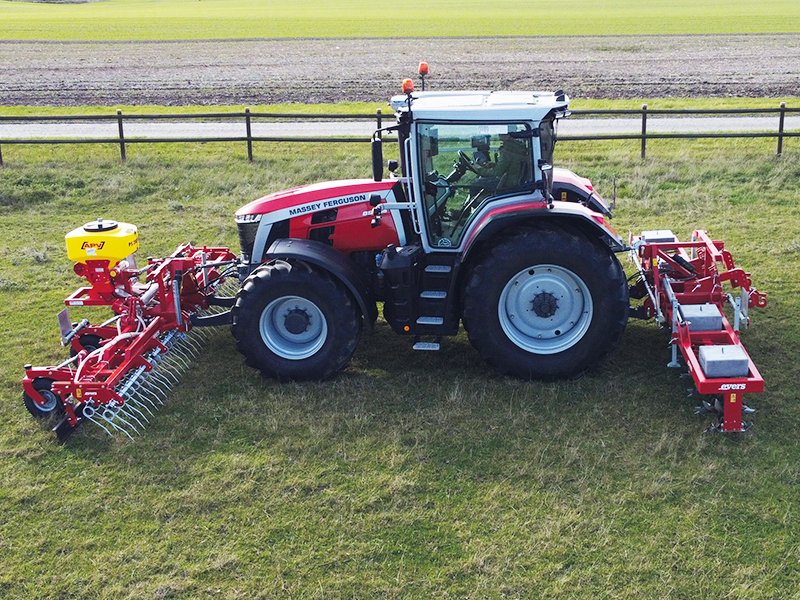
Evers supplies machinery for grassland cultivation that contributes to higher yields and improved forage quality.
Evers grassland machines ensure higher yields and improved forage quality. The frontharrow with seeding unit removes poor grasses and weeds and renovates the sward. Aerating and loosening the soil relieve compaction and improve drainage, root development and oxygen levels, allowing the grass to absorb nutrients more efficiently.
A level field also helps prevent crop contamination. Less soil in the forage means:
Mowing and harvesting: timing is everything
The right mowing moment determines the feed value:
Too early mowing = lower yield
Too late mowing = lower digestibility
MaksiGrass supplies Grass Technology mowers and loader wagons that ensure an efficient and clean harvest. The focus is not only on ensiling, but also on optimally utilising fresh grass.
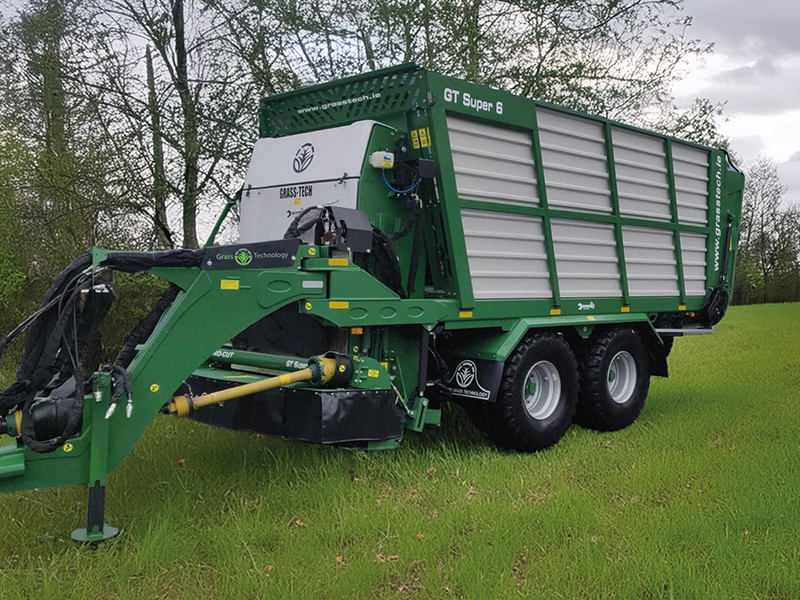
With solutions such as the Zero Grazer, it becomes possible to fully utilise the potential of fresh grass by harvesting and feeding it directly.
This results in:
The correct cutting height remains essential. It promotes high-quality grass varieties and supports faster regrowth.
Maximum output through fast and clean operations
During harvest, every minute counts. Especially in short harvesting windows, contractors must be able to rely on:
The shorter the time between mowing and ensiling, the better the quality is preserved. Work with a tight schedule and avoid waiting times at the yard, this directly benefits forage quality.
Ensiling: this is where quality is secured
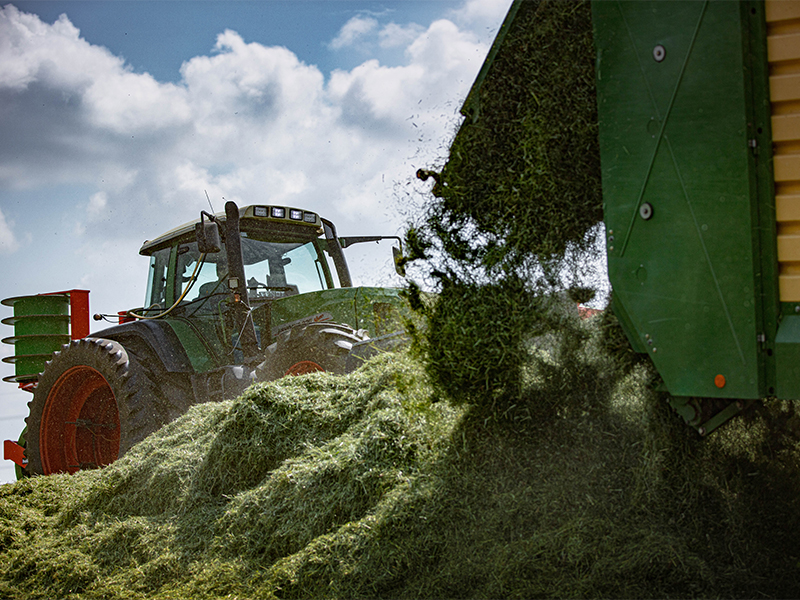
After harvesting, the most critical phase begins: ensiling. This is where you determine how much feed value you preserve.
Good ensiling means:
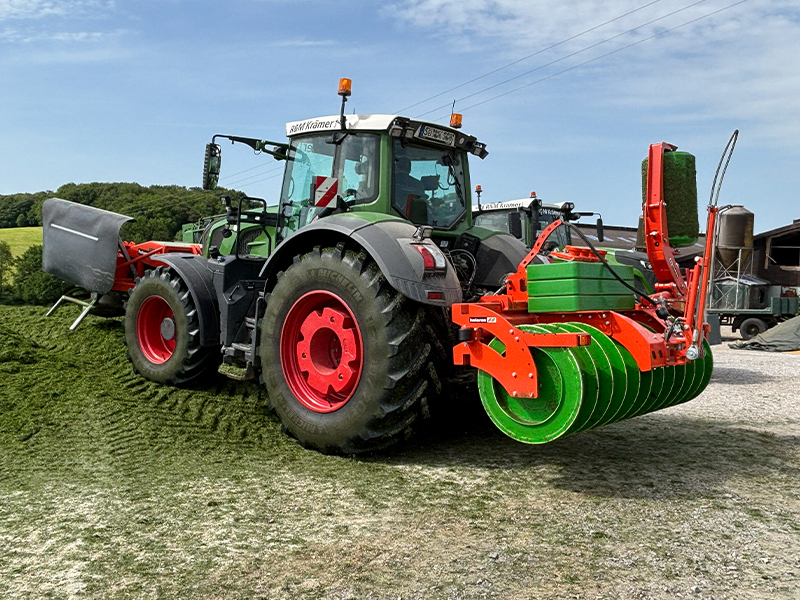
Holaras supports this process with machines for silage distribution and compaction. By working in thin layers (the lasagne principle), a stable silage clamp is created with less heating, higher feed value and consistent forage quality.
Work in layers of no more than 20–30 cm and continuously compact, that’s where you gain your advantage.
The right silage wall makes the difference
A well-designed silage storage starts with strong silage walls. Silage walls provide:
Bosch Beton supplies silage walls with a long service life, which can be delivered quickly and often placed directly from the truck.
In addition, the entire process is taken care of: from advice and design to planning and installation. Because in the end, good feeding means good farming.
Investing in proper silage storage pays off every year through reduced losses.
Covering prevents losses
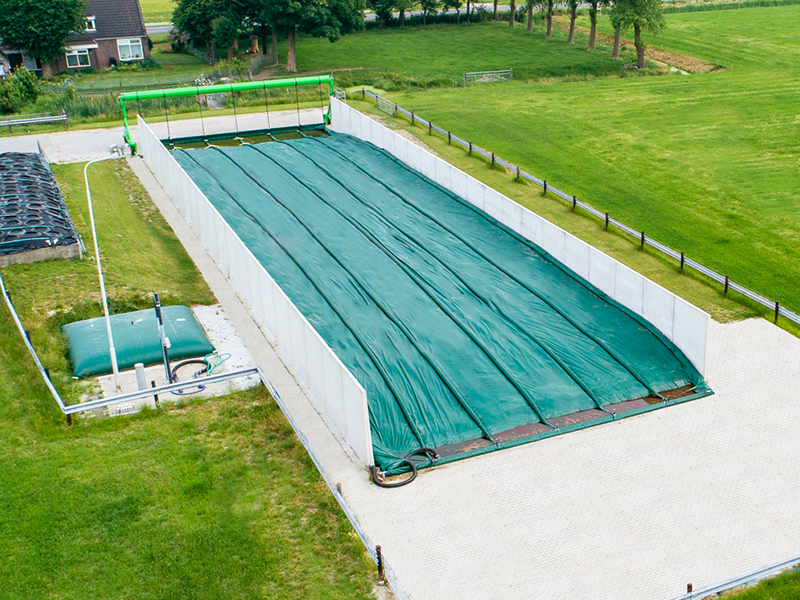
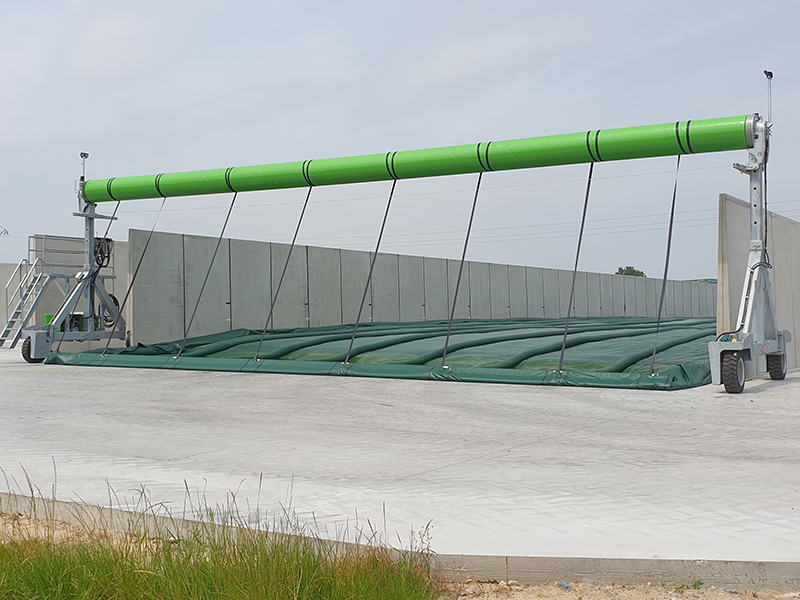
Even the best silage loses quality without proper covering. Agridek develops smart systems for fast and efficient silage covering. Think of solutions such as sandwich silage, which ensures:
By working with modern systems, a silage clamp can be covered quickly, with less labour and consistent forage quality, season after season.
Cover your silage immediately after ensiling. Every hour of delay reduces quality.
Grass bales: flexibility in forage
Grass bales offer additional flexibility, especially for:
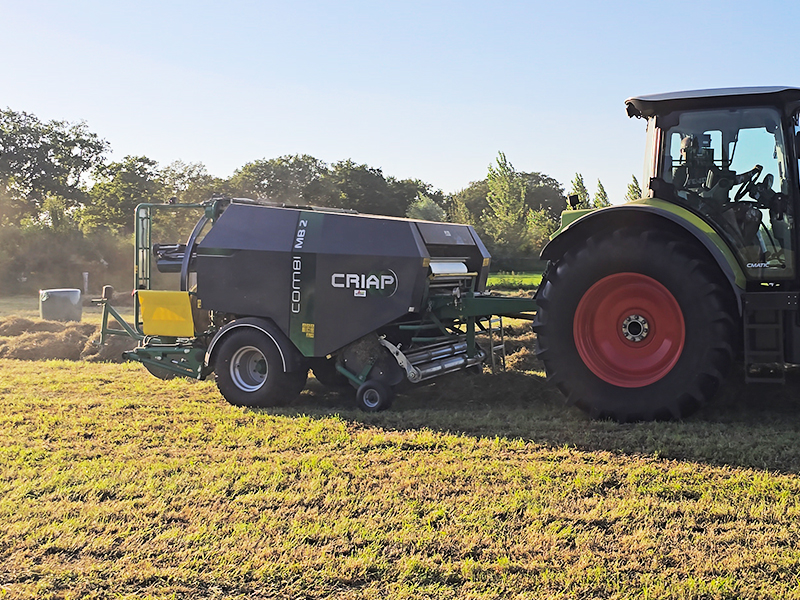
Criap supplies balers and wrappers that ensure high bale density, airtight storage and reliable preservation.
With a wide pick-up (190 cm), clean feeding is achieved, while systems such as a hydraulic drop floor with knives, NRF film binding and a vertical ring wrapper
contribute to tightly wrapped bales with minimal air inclusion.
Use bales strategically for fields with varying quality or for horse feed.
From individual steps to one complete process
Every step in the forage process has an impact. That is why Holaras, Evers Agro, Bosch Beton, Agridek, Criap and MaksiGrass work together. By combining knowledge and solutions, the entire process is optimised.
The result:
Getting more out of forage together
Through knowledge events, demonstrations and trade shows, the partners show Scandinavian farmers and contractors how efficiency, quality and return come together.
Want to know how you can improve your forage process?
Get in touch or visit one of the events.
Together, we get more out of forage.

For more than 60 years, we have provided solutions in the areas of soil cultivation, slurry injection and and grassland maintenance.